
You have a great book idea, but getting that idea in front of an agent or publisher can feel confusing. A proposal is one of the tools that can help you turn a promising idea into a professional publishing pitch.
Instead of simply saying, “I have written a book,” you show what the book is about, who will read it, and why it deserves a place in the market.
For first-time authors, the process may seem harder than writing the book itself. The good news is that you do not need to sound like a publishing expert.
You need a clear idea, useful research, strong writing, and a realistic plan. This guide explains each important part and shows you how to approach the process with confidence.
What Is a Proposal?
A proposal is a document that presents your book idea to a literary agent or publisher. It gives them enough information to understand the project, its readers, its market, and your ability to write and promote it. Think of it as a business plan for your book, combined with a sample of your writing.
The goal is not to tell every detail of the story. Instead, you make the project easy to understand and interesting enough that someone wants to read more.
A strong proposal answers simple questions:
- What is this book about?
- Who needs it?
- What makes it different?
- Why are you the right author?
Do You Need a Proposal?
Not every author follows the same path. Proposals are especially common in nonfiction publishing, where publishers may consider a strong idea before the complete manuscript exists. Fiction publishing often works differently, with agents commonly asking for a query, synopsis, and completed manuscript.
If you are writing nonfiction, a nonfiction book proposal can help you present your idea before spending years completing the full manuscript. Always check the submission rules for the agent or publisher you want to approach because requirements can vary.
What Should a Proposal Include?
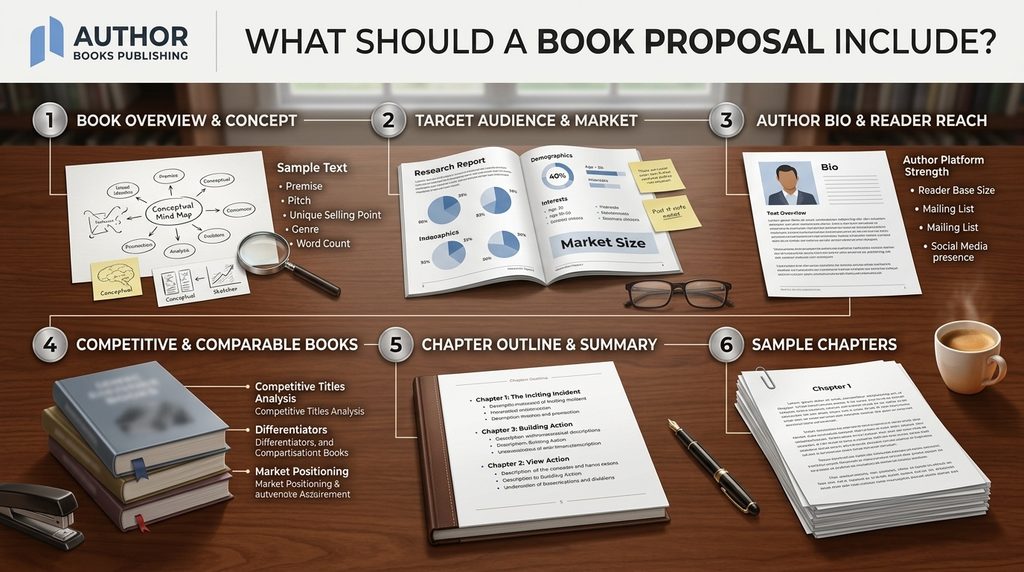
A proposal normally brings several important pieces together. The exact requirements can change, but most publishers or agents want to see the idea, audience, market, author background, structure, and sample writing.
Book Overview and Concept
Start by explaining the central idea in an easy way to be understood by anybody. Clearly state the problems this book solves, and the experience readers will gain. Avoid false statements like “This book will change people’s lives.” Instead, give readers a clear reason the book matters.
A book proposal example might explain the idea in one clear sentence. For example, instead of saying you are writing a book about healthy eating, explain that it helps busy parents prepare simple, affordable meals in less than 30 minutes. That one sentence gives the reader a clearer picture of the project.
Target Audience and Market
Publishers need to know who is likely to buy the book. Describe your ideal readers by their interests, profession, age group, or situation when those details matter. Then explain why these readers are likely to care about your subject.
Don’t simply claim that everyone is your target audience. A focused audience is often more useful because it shows that you understand your readers. You should also explain where these readers already look for information, such as websites, communities, podcasts, or social platforms.
Author Bio and Reader Reach
Your background can help show why you are qualified to write the book. Mention relevant education, professional work, awards, previous publications, experience, or other evidence that supports your expertise.
Your author platform matters too. This means the connections, channels, and audience you already have that can help readers discover your work. You do not need millions of followers. A smaller audience that genuinely trusts you can still be valuable.
Competitive and Comparable Books
Research books that are similar to yours, often called comparable titles. Explain what those books do well and where your project offers something different. You might serve a different audience, cover a missing topic, use a fresh approach, or provide a more practical solution.
Be respectful when discussing other authors. The goal is not to say that existing books are bad. The goal is to show that readers already care about the subject and that your project has its own place in the market.
Chapter Outline and Summary
Your outline shows how the book will move from one idea to the next. Give each chapter a clear purpose and explain what readers will learn or experience. A book proposal outline should help an agent understand the complete journey without requiring them to read the whole manuscript.
A short book synopsis can also help summarize the larger project. Keep the focus on the most important ideas rather than filling the page with minor details.
Sample Chapters
Sample chapters give agents or publishers a chance to judge your actual writing. Choose sections that represent the book well and show your strongest work. Make sure they are polished, clear, and consistent with the tone promised in the rest of the proposal.
Writing the Proposal Step by Step
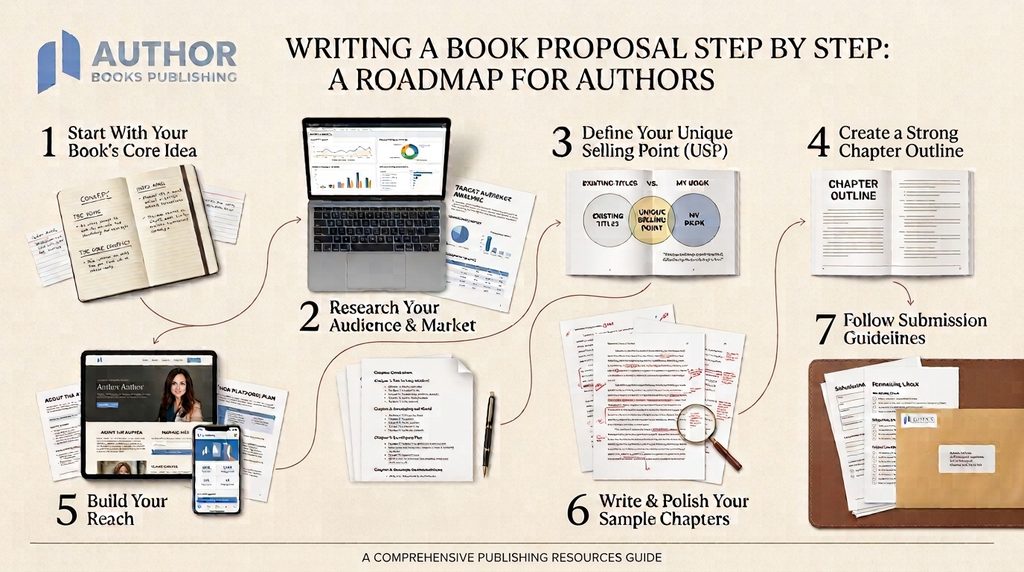
Once you understand the main parts, the process becomes much easier. Think of your proposal as a connected story. Every section should support the same central idea and help the reader see why the project deserves attention.
Start With Your Book’s Core Idea
Write your main idea in one or two clear sentences before working on longer sections. If you cannot explain the concept simply, you may need to develop the idea further. This short description can also guide the rest of your writing.
Research Your Audience and Market
Spend time learning what your potential readers want. Look at competing books, reader reviews, online discussions, and current conversations around your topic. This research can reveal useful gaps and help you avoid making unsupported claims.
Define Your Book’s Unique Selling Point
Ask what makes your project worth publishing when similar books already exist. Keep the answer specific and easy to understand, which might be your approach, audience, story, experience, or research.
Build Your Reach
Think beyond social media numbers. Your reach may include a website, professional network, email list, existing readership, speaking experience, or strong relationships within your field. Focus on genuine ways you can reach readers.
Create a Strong Chapter Outline
Map the book from beginning to end. Give every chapter a job. Remove sections that repeat the same point or do not move the reader forward. A clear structure makes the project feel organized and achievable.
Write and Polish Your Sample Chapters
Treat your sample pages as an audition. Check the opening, flow, grammar, and clarity. Read the pages aloud if possible. If a sentence sounds awkward when spoken, rewrite it until it feels natural.
Follow Submission Guidelines
Before sending anything, read the agents’ or publishers’ instructions. They may request specific sections, page limits, or different file types. A well written proposal can still be rejected if the submission ignores clear requirements.
Common Proposal Mistakes First-Time Authors Should Avoid
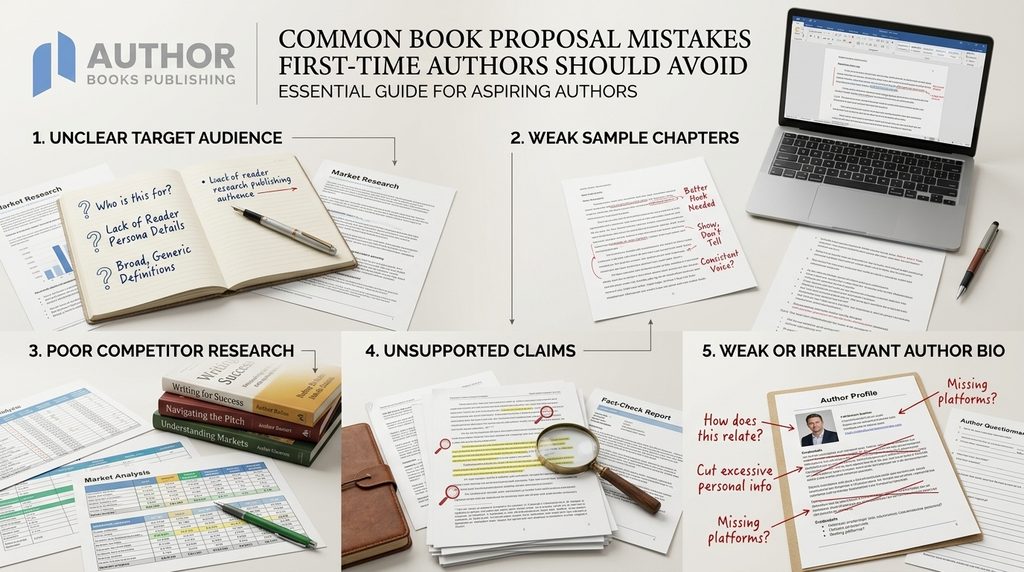
First-time authors often focus so heavily on their idea that they forget the reader and the publishing market. Another common mistake is making broad claims without evidence. Saying that millions of people will buy a book does not prove that they will.
Other problems include weak sample chapters, unclear audience descriptions, poor competitor research, and an author bio that does not explain relevant experience.
Keep the document focused. Every section should answer a useful question rather than exist simply because you think it belongs there.
Tips for Book Proposal Writing That Gets Attention
Clarity is your biggest advantage, use simple language and confident but realistic statements. Make it easy for a busy reader to understand the project within a few minutes.
Use a book proposal template only as a guide, not as a script. A template can help you remember important sections, but your content should still feel personal and original. You should also pay attention to the requested book proposal format.
How Long Should a Proposal Be?
There is no single perfect length. Requirements differ between agents, publishers, projects, and genres. Some may want a short document, while others may request more detail. Follow the specific guidelines whenever they are provided.
Instead of trying to reach a certain page count, make sure every section earns its space. Remove repeated ideas and unnecessary background information.
Should You Hire a Professional to Help with Your Proposal?
Professional help can be useful if you are unsure about structure, market positioning, or the quality of your sample chapters. An editor or publishing professional can offer an outside perspective and point out problems you may not notice yourself.
You do not have to hire someone, though. Many authors can create a strong submission by researching carefully, following guidelines, and revising their work several times.
Ready to Turn Your Rough Draft into a Bestseller?
Get a free sample edit from Continental Book Publishing today!
Submit Your Manuscript for a Free Sample Edit NowFinal Checklist Before Submitting Your Proposal
Before you send your work, take a final pause and review the entire document. Ask yourself whether the concept is clear, the market research is believable, the audience is specific,, and the sample writing reflects your best work.
A simple final check can include:
- Clear and original concept
- Specific target audience
- Relevant author background
- Realistic market research
- Strong chapter structure
- Polished sample chapters
- Correct formatting and submission requirements
Conclusion
Writing a proposal may feel intimidating when you have never worked with agents or publishers before. But the process becomes much easier when you break it into clear steps. Focus on the idea, research the market, understand your readers, show what you can do as a writer, and explain your structure.
Most importantly, do not try to make your submission sound complicated. A clear and honest presentation can be more powerful than impressive-sounding language. If you want professional guidance while preparing your publishing materials, Author Book Publishing can help you approach the process with greater confidence and clarity.
Frequently Asked Questions
A book proposal is a document that presents a book idea to an agent or publisher. It explains the book’s concept, market potential, author background, structure, target audience, and sample writing to show why the project is worth publishing.
Book proposals are most common for nonfiction authors who want to pitch an idea before completing the full manuscript. Fiction authors usually follow a different submission process, although requirements can vary by agent, publisher, and genre.
Start by clearly explaining your book idea and identifying its target audience. Then include information about the market, your background, chapter structure, competing books, and sample writing. Revise the proposal carefully and follow the submission guidelines of the agent or publisher.
A proposal commonly includes a book overview, target audience, market analysis, competitive titles, author biography, platform or promotional plan, chapter outline, and sample chapters. The exact requirements may differ depending on the agent or publisher.
There is no universal length for a proposal. Some agents and publishers request a few pages, while others may want a more detailed document. Always follow the specific submission guidelines instead of adding information simply to make the proposal longer.
The purpose is to convince an agent or publisher that your book has a clear concept, a defined audience, market potential, and a qualified author behind it. It gives them enough information to decide whether they want to explore the project further.
First-time authors may need one, especially when pitching a nonfiction project. However, not every publishing deal requires a proposal, and fiction submissions often follow different rules. Authors should check the requirements of the specific agent or publisher they plan to approach.
Yes. Authors can write and submit proposals themselves when a publisher accepts direct submissions. However, some publishers only work with literary agents, so it is important to research their submission policies before sending your work.
A proposal pitches the book and explains its concept, audience, market, structure, and author credentials. A manuscript is the actual written book. In simple terms, the proposal explains why the book should be published, while the manuscript shows what the book is.
First, research publishers that accept your genre and type of project. Read their submission guidelines carefully and prepare the requested materials. Then submit your proposal through the publisher’s stated method, such as an online submission form or email. Some publishers require authors to submit through a literary agent, so check this before sending anything.