


Everyone has a story, whether it includes a difficult childhood, a big move, a special friendship, a career change, a family journey, or a lesson that changed the way you see the world.
You do not need to be famous to have a story worth sharing. Sometimes, the most powerful stories come from ordinary people who have experienced something meaningful.
If you have ever wondered how to write a book about your life, the good news is that you do not need to have everything figured out before you begin. You simply need a reason to write, a collection of memories, and a willingness to put those memories into words.
Decide Why You Want to Write About Your Life
Before writing your first chapter, take a moment to think about why you want to tell your story. Your reason will help guide almost every decision you make later.
Maybe you want to preserve family memories for your children or grandchildren. Perhaps you went through a difficult experience and want to share what you learned. You may also simply enjoy writing and feel that your experiences could help or entertain other people.
If your goal is to inspire others, you may focus more on challenges and lessons. If you are creating a family keepsake, you might include more personal memories, photographs, and stories about relatives.
It also helps to think about your readers. A book written for close family members can sound very different from one written for a general audience. Knowing your readers will make it easier to decide what information belongs in your book.
Choose the Type of Life Story You Want to Write

Once you know why you are writing, decide what kind of book you want to create. This choice can make the writing process much easier.
What Is the Difference between Memoir and Autobiography?
An autobiography usually tells the story of a person’s life from childhood through the present. It often follows a chronological order and covers many important events.
A memoir is usually more focused. Instead of telling everything, it explores a particular period, experience, relationship, or theme. Someone might write a memoir about growing up in a small town rather than describing every year of their life.
You do not have to follow strict rules. Think about the story you most want to tell and choose the format that fits it.
Focus on One Part of Your Life or Tell the Full Story?
Trying to cover your entire life can make a book feel crowded. You may have hundreds of memories, but that does not mean all of them need to appear in your book.
Ask yourself what your story is actually about. If the most meaningful part of your life was starting a new career after years of struggle, that could become the central focus. Other experiences can still appear when they help explain that journey.
A focused story is often easier for readers to follow and more enjoyable to write.
Find the Most Important Stories and Memories
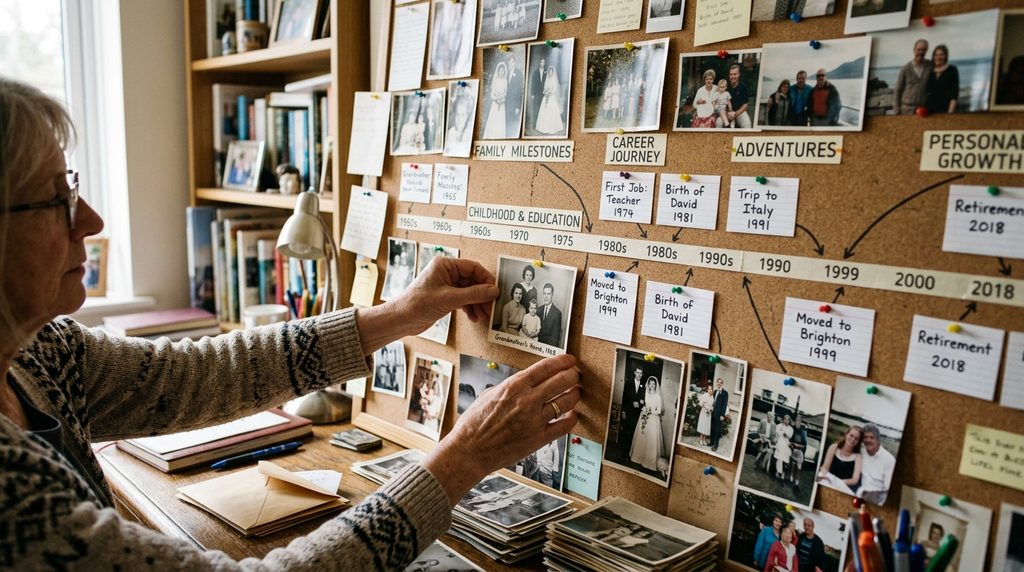
Your memories are the raw material for your book. Before turning them into chapters, spend some time gathering them.
Make a Timeline of Your Life
Start with a simple timeline and write down the major events from childhood to the present. Include places you lived, important relationships, jobs, celebrations, schools you attended, setbacks, and major changes.
Do not worry about writing beautiful sentences yet. A few words beside each year or period are enough. This timeline gives you a map of your life and helps you notice connections between different experiences.
You may also discover memories you had forgotten. Looking through old photographs, letters, journals, or family albums can bring those moments back.
Identify the Moments That Changed You
Not every memory deserves a full chapter. Look for moments that changed something.
Maybe you made a difficult decision, lost someone important, overcame a fear, met someone who influenced your life, or discovered something about yourself.
These turning points usually make strong material because they give your story movement and meaning.
For example, instead of writing five pages about every school year, you might focus on the teacher who encouraged you when you struggled. That one experience could reveal much more about you.
Choose Memories That Support Your Main Story
After gathering your memories, start removing anything that does not serve your main idea. This does not mean the memory is unimportant. It simply may not belong in this particular book.
A useful question is: “Does this story help readers understand me, my journey, or the lesson I want to share?” If the answer is no, save it for another project.
Create a Clear Structure for Your Life Story

Good stories are easier to read when they have a clear path. Your readers should understand where the story begins, what happens along the way, and how you have changed by the end.
Organize Your Story in Chronological Order
The simplest structure is to tell events in the order they happened. You might begin with childhood, move through your teenage years, then discuss adulthood and the present.
This approach works especially well when your life story covers many years. Readers can follow your growth without constantly jumping between different periods.
Use Themes to Connect Different Memories
You do not always have to follow a strict timeline. You can organize your book around a theme such as family, courage, friendship, failure, personal growth, or finding your purpose.
For example, a chapter about a childhood challenge could connect with a later chapter about facing a similar challenge as an adult. The events happened years apart, but the shared theme gives them a natural connection.
Build a Beginning, Middle, and End
Even a true story needs a sense of direction. Your beginning introduces your world and the main situation. The middle explores the challenges, choices, and experiences that shaped you. The ending shows where those experiences led you.
This does not mean your life has to have a perfect ending. A satisfying ending can simply show what you understand now that you did not understand before.
Turn Your Memories into Engaging Chapters
Knowing what happened is only the beginning. You also need to make readers feel like they are experiencing those moments with you.
Start Each Chapter with a Strong Hook
Avoid starting every chapter with a simple statement such as, “When I was 12, we moved to another city.”
Instead, begin with something that creates curiosity. You might describe the sound of boxes being packed, the feeling of sitting alone in a new classroom, or the moment you received unexpected news.
A strong opening makes readers want to know what happens next.
Include Details That Help Readers Picture the Moment
Small details can make a memory feel real. Describe what you saw, heard, smelled, or felt when appropriate.
For example, instead of saying, “I was nervous before my first job interview,” you could describe your shaking hands, the cold waiting-room chair, or how many times you checked your notes.
You do not need dozens of details. Choose a few that make the scene easy to imagine.
Balance Personal Experiences with Reflection
Your readers want to know what happened, but they also want to understand why it mattered.
After telling an important story, explain what you learned from it. Maybe you discovered that failure was not the end of your journey, or that asking for help was a sign of strength rather than weakness.
This reflection gives your memories greater meaning.
Write Honestly Without Revealing Everything
When learning how to write a book about your life, one of the biggest challenges is deciding how much personal information to share.
Honesty can make a life story powerful, but you still have control over your boundaries. You don’t have to reveal every secret, private conversation, or painful experience simply because it happened.
Decide What Personal Details to Include
Ask whether each personal detail adds some kind of value to the story. If it helps readers to understand your emotions or choices, it may belong. If it only creates shock without adding meaning, consider leaving it out.
You can tell the truth while still protecting parts of your private life.
Protect the Privacy of Other People
Your life story will probably include other people. Friends, relatives, teachers, coworkers, and partners may appear in your memories.
Think carefully before including information that could embarrass, harm, or unnecessarily identify someone. Depending on your situation, you may choose to change certain identifying details or discuss sensitive events in a more careful way.
Handle Difficult or Emotional Memories Carefully
Writing about painful experiences can bring strong emotions back to the surface. Give yourself time when you need it. You do not have to write the hardest chapter in one sitting.
It can help to take breaks, write in short sessions, and return to difficult sections when you feel ready.
Develop Your Own Voice and Writing Style
Your life story should sound like you. You do not need complicated words or fancy sentences to create a good book.
Write Like You Naturally Speak
Imagine that you are telling an interesting story to someone you trust. Use clear language and natural expressions.
This does not mean your writing should sound careless. Read each paragraph aloud. If it feels stiff or unnatural, rewrite it until it sounds more like your real voice.
Show Emotions Through Stories and Details
Instead of repeatedly saying, “I was sad,” show what sadness looked like in that exact moment. Maybe you stopped answering messages, sat quietly at the kitchen table, or found yourself looking through an old photograph.
Specific actions often communicate emotions more strongly than simply naming them.
Avoid Trying to Sound Like Another Author
Your experiences are unique, so your voice should be unique too. You do not need to copy the style of a famous writer.
Write honestly, clearly, and naturally. Readers are more likely to connect with a genuine voice than writing that feels forced.
Revise Your First Draft into a Stronger Story
Your first draft does not need to be perfect. In fact, expecting perfection can stop you from finishing the book.
Once you have completed a draft, step away from it for a little while if possible. Then return with fresh eyes.
Professional editing and proofreading services can help improve your manuscript before publishing.
Look for Repeated or Unnecessary Memories
You may notice that you have explained the same lesson several times or included several stories that make the same point. Remove or combine them.
Improve Transitions Between Chapters
Each chapter should lead naturally into the next. A short sentence or reflection can help explain why you are moving from one period of your life to another.
Check Facts, Names, Dates, and Important Details
Go through your manuscript carefully. Check dates, locations, names, and other important information. If you are unsure about a memory, avoid presenting uncertain details as definite facts.
A careful review makes your book more trustworthy and polished.
Consider How You Want to Publish Your Life Story

Once your manuscript is ready, you need to decide how you want to share it.
Traditional publishing usually involves submitting your work to literary agents or publishers. It can take time and may involve several rounds of editing and review.
Self publishing gives you more control over the final book. You can make decisions about the cover, formatting, pricing, and publication schedule, although you are also responsible for arranging professional editing and other services.
If you are not confident about editing, formatting, or preparing the manuscript, you can also work with experienced professionals who understand the publishing process.
Common Mistakes to Avoid When Writing a Book About Your Life
A few common mistakes can make a personal story harder to read. Avoid trying to include every single event simply because it happened. Readers usually care more about meaningful moments than a complete record of every day.
Another most common mistake is turning the book into a list of events. Instead of simply saying what happened, explain how those events affected you and avoid making every chapter follow the exact same pattern. Different experiences need different pacing and levels of detail.
Most importantly, do not expect your first draft to be perfect. Writing is a process. The strongest version of your story often appears after you revise it.
Final Tips for Finishing Your Life Story
The best way to finish your book is to create a writing habit. You do not need to write for hours every day. Even a small amount of progress can add up over time.
Keep a notebook or digital document nearby for memories that suddenly come back to you. A smell, song, photograph, or conversation can sometimes unlock a story you had forgotten.
You can also use this simple approach when you feel stuck:
- Write one memory without worrying about grammar.
- Add the details that make the scene feel real.
- Explain why the moment mattered.
- Move on to the next memory instead of trying to perfect the page.
Your Story Is Worth Telling
Learning how to write a book about your life may seem like a huge task, but you do not have to write the whole book at once. Start with one memory, one meaningful moment, or one story you have always wanted to tell.
Gather your experiences, organize them into a story with a clear purpose and find the moments that shaped you. Be honest while respecting your own boundaries and the privacy of others. Most importantly, let your natural voice come through.
The lessons you learned, the challenges you faced, and the people who shaped you may mean more to readers than you realize. With consistent effort and patience, you can turn your memories into a book that gives your story a lasting place on the page.
Frequently Asked Questions
Start by deciding why you want to tell your story and who you want to read it. Then make a simple timeline of important events, memories, relationships, challenges, and turning points. Choose the experiences that best support the main message of your book and begin writing them in simple, honest language. Your first draft does not need to be perfect.
Start by gathering your most meaningful memories and deciding what your story is really about. Organize those memories into a clear structure with a beginning, middle, and end. Turn important experiences into chapters, add details that help readers picture each moment, and explain what you learned from those experiences. After finishing the first draft, revise it to improve the flow and remove unnecessary information.
Focus on experiences that shaped you or changed the way you think. These might include childhood memories, family relationships, major achievements, difficult times, important decisions, friendships, career changes, or personal challenges. You do not need to include every event from your life. Choose stories that are meaningful, interesting, or helpful to your intended readers.
There is no fixed length for a life story. A focused memoir may be around 50,000 to 80,000 words, while a broader autobiography can be longer. The right length depends on how much of your life you want to cover and how much detail each story needs. Focus on telling a complete and engaging story rather than trying to reach a specific word count.
An autobiography generally tells the story of a person’s life from early years through later life, often covering many major events in chronological order. A memoir usually focuses on a particular period, experience, relationship, or theme. For example, an autobiography might cover your entire life, while a memoir could focus specifically on growing up in a particular place or overcoming a major challenge.
Start by grouping related memories. You can organize chapters chronologically, beginning with childhood and moving toward the present, or organize them around themes such as family, relationships, challenges, or personal growth. Each chapter should have a clear purpose and connect naturally to the next. A simple beginning, middle, and ending structure can make your story much easier to follow.
No. You do not need professional writing experience to tell your life story. Start by writing in your natural voice and focus on getting your memories onto the page. You can improve grammar, structure, and style during revision. If needed, an editor or professional book-writing service can help turn your draft into a polished manuscript.
You can publish your life story through traditional publishing or self-publishing. Traditional publishing usually involves submitting your manuscript to literary agents or publishers and going through their selection process. Self-publishing gives you more control over the book but requires you to manage areas such as editing, formatting, cover design, and distribution. Before publishing, consider having your manuscript professionally edited and carefully reviewed.