


Writing a children’s book can start with something as small as a funny idea, a curious character, or a bedtime story you tell again and again.
But turning that idea into a finished book takes planning, creativity, and careful editing. You need to know who you are writing for, what your story is about, and how words and pictures will work together.
If you have ever wondered how to write a children’s book, the good news is that you do not need to have everything figured out on day one.
You can build your book one step at a time. From choosing an idea and creating characters to editing, illustrating, and publishing, each stage helps turn a simple thought into a story children can enjoy.
1. Start With a Clear Children’s Book Idea
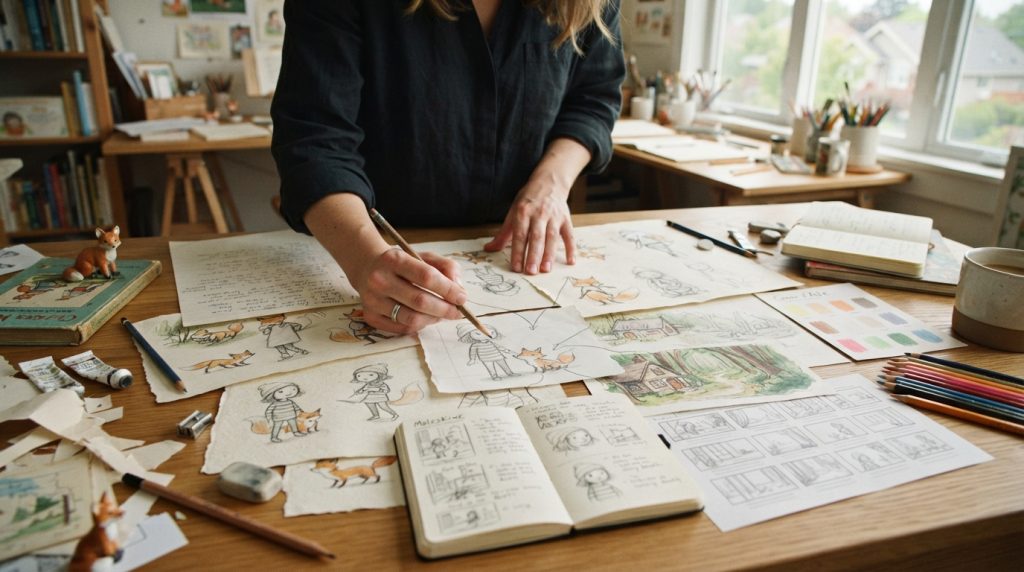
Every great children’s book begins with an interesting idea. It could be about a child who wants to make a new friend, a little dog searching for its favorite toy, or a nervous dragon learning to fly. The best ideas are usually simple enough for children to understand but interesting enough to make them curious.
Start by asking yourself what you want your story to explore. Do you want to make children laugh, help them understand a feeling, or take them on an exciting adventure?
Choose one main idea rather than trying to teach several lessons at once. For example, a story about a shy child starting school could focus on friendship and finding confidence.
Your idea should also match the age of your readers. A story for a three year old will be very different from one written for an eight year old. Keep the characters, language, problems, and themes suitable for the children who will read the book.
2. Choose the Right Age Group and Reading Level
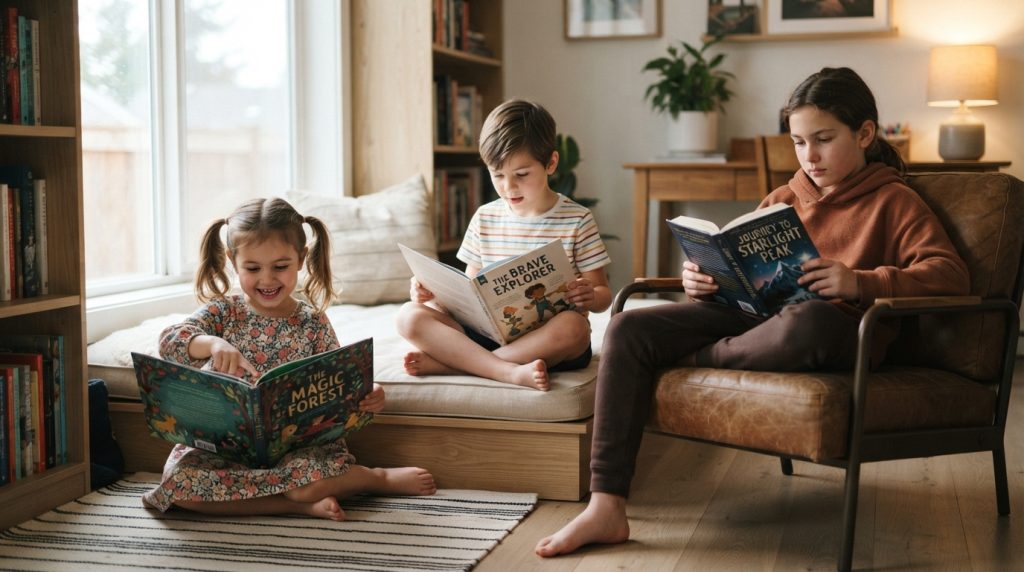
Before you start writing a children’s book, you should decide exactly who your book is for. Children’s books cover a wide range of ages, and each group has different needs. Knowing about your audience will help you choose the right words, story length, and level of detail.
Books for Toddlers and Preschoolers
Books for very young children usually use short sentences, simple words, repetition, and bright ideas. The story may focus on everyday experiences such as bedtime, sharing toys, visiting the park, or meeting an animal.
Books for Early Readers
Early readers can handle longer stories and slightly more complex ideas. They may enjoy stories about school, friendship, family, animals, adventures, or solving small problems. The vocabulary can grow with the reader, but it should still be easy to follow.
Books for Older Children
Older children are able to understand more detailed story plots, stronger character development, humor, and bigger challenges. You can explore topics such as courage, identity, responsibility, or overcoming fears while still keeping the story entertaining.
3. Develop the Characters and Story
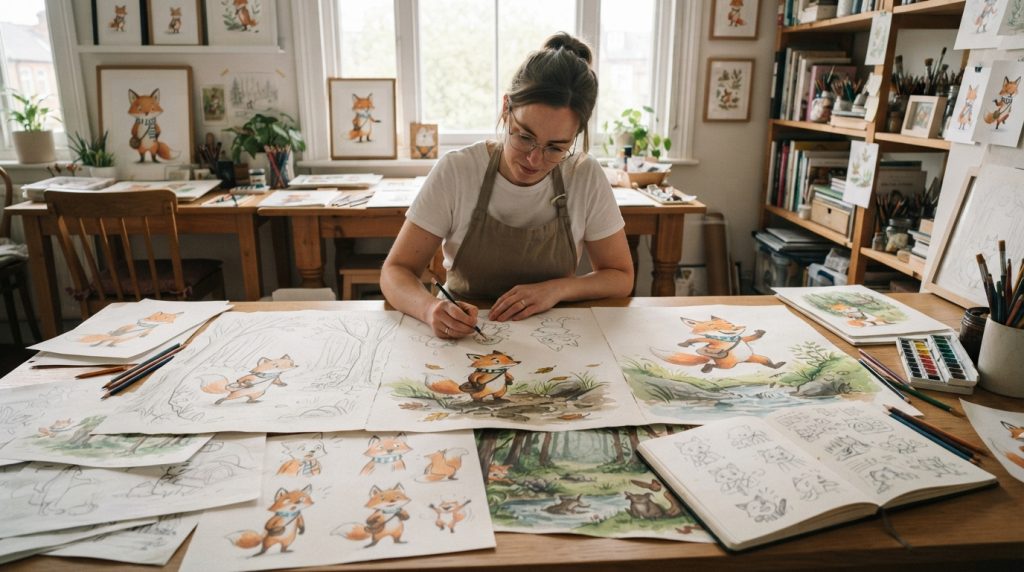
Once you know your audience, build the people or creatures who will carry your story. A memorable character does not need to be complicated. What matters is giving the character a clear personality, desire, and problem.
Create a Memorable Main Character
Think about what makes your character special. Maybe your main character is a rabbit who is afraid of carrots, a young inventor who keeps making silly mistakes, or a girl who talks to the moon. A small, unusual detail can make a character easier for children to remember.
Give the Character a Clear Goal or Problem
Your main character should have an interesting and complex goal. Perhaps they want to win a race, find their lost friend, overcome a fear, or discover where a strange sound is coming from. This goal gives the story direction.
Build a Simple Beginning, Middle, and End
A simple structure can make your story much easier to write. The beginning introduces the character and problem. The middle shows the character trying to solve it. The ending provides a solution or a meaningful change.
For example, a child may be afraid to speak in class. At first, they stay quiet. In the middle, they practice and face small challenges. By the end, they find the courage to raise their hand. The story feels complete because the character has changed.
4. Write the First Draft
Now it is time to put the story on the page. Do not try to make every sentence perfect during your first attempt. Your main goal is to get the complete story written.
Use words children can understand, but do not make the writing boring. Children enjoy stories that move, surprise, and make them feel something. Dialogue can make characters feel real, while action can keep the story moving.
Reading your draft aloud is especially helpful. You may notice that a sentence sounds too long, a word feels awkward, or a part of the story moves too slowly.
If you are learning how to write a children’s book, reading aloud is one of the easiest ways to hear whether your story sounds natural.
5. Make the Story Engaging for Children
Children have active imaginations, so you should give them something to wonder about. A good story might begin with an unusual question, a funny problem, or an unexpected event.
Repetition also works well, especially for younger readers. A repeated phrase can become something children recognize and enjoy saying along with the story. Rhyming can be fun too, but it should support the story rather than force you into awkward sentences.
Pay attention to pacing. If nothing changes for several pages, young readers may lose interest. Give your character small challenges, discoveries, jokes, or surprises along the way.
Most importantly, give the story an ending that feels earned. Children should feel that the journey mattered, whether the ending is funny, exciting, comforting, or emotional.
6. Plan the Illustrations
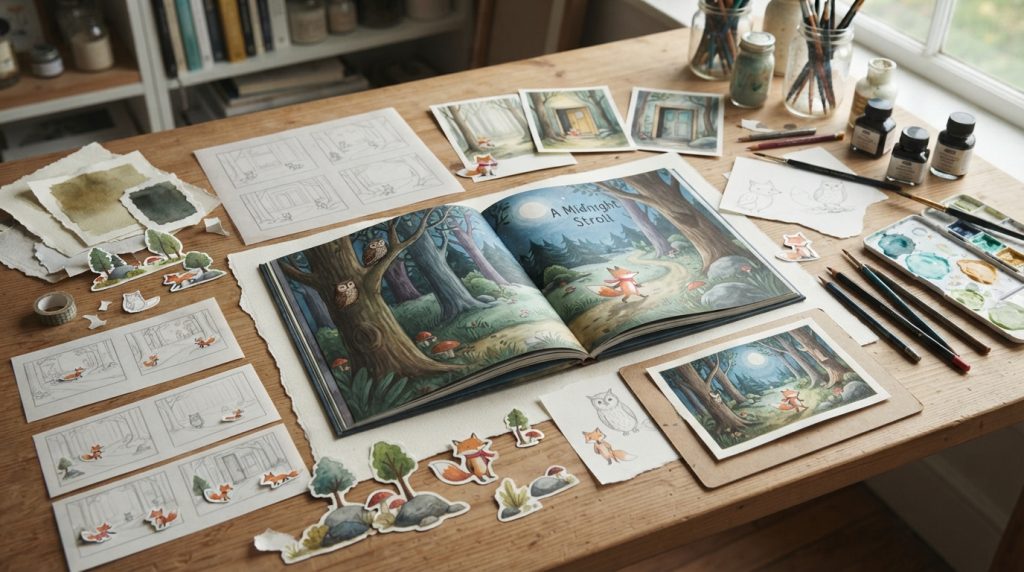
Words and pictures work together in a children’s story book. Illustrations should not simply repeat every sentence. They can show emotions, add humor, reveal details and help children understand what is happening.
Before hiring an illustrator or creating the artwork yourself, think about what each page or spread should communicate. You can make a basic storyboard using simple notes. For example, one page might show the main character hiding behind a tree while a giant shadow approaches.
Consider the overall visual style as well. A playful story may suit colorful and energetic artwork, while a gentle bedtime story might work better with softer, calmer illustrations. The important thing is that the pictures should match the mood of the book.
7. Edit and Improve Your Children’s Book
The first draft is rarely the final one. Good editing helps remove unnecessary words, make the story stronger and fix confusing parts.
Start by checking whether every scene has a purpose. If a paragraph does not move the story forward, reveal something important, or create an emotion, consider cutting it. Shorter writing is often stronger in children’s books.
Simplify the Language
Replace difficult words when a simpler word works better. You want children to understand the story without stopping every few sentences to figure out what something means.
Check the Story’s Flow and Pacing
Make sure the events take place in a logical order. Watch for places where the story suddenly feels too slow or rushed.
Read the Book Aloud
Listen for sentences that feel clumsy or repetitive. If you stumble while reading, a young reader might struggle too.
Get Feedback from Others
You should ask a parent, teacher, editor, or another trusted reader to review the manuscript. If possible, listen to how children respond to it. Their reactions can reveal things you may not notice yourself.
8. Format the Book for Publication
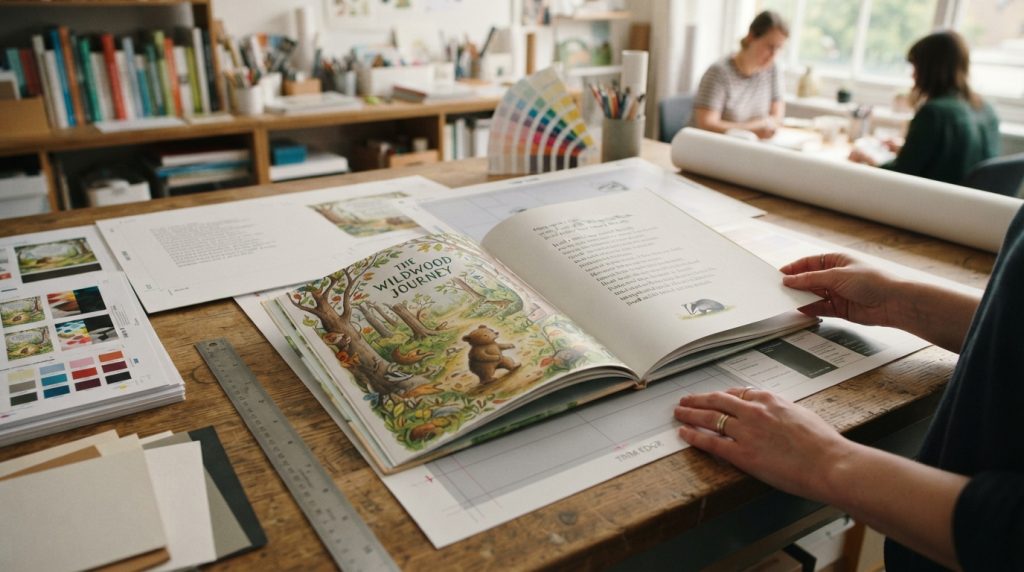
After the story and artwork are ready, you need to put everything together in a professional layout. Choose a suitable page size, readable font, and consistent spacing.
The text should be easy to read, while the illustrations should have enough space to stand out. Check that page numbers, margins, covers, and artwork are placed correctly. If your book will be printed, follow the printer’s requirements for file size, resolution, and bleed.
It is also worth checking the entire book carefully before publishing. One missing word or misplaced image can affect the finished product.
9. Choose How You Want to Publish
There are two main paths for getting a children’s book into readers hands, one is traditional publishing, and the other is self-publishing.
Traditional Publishing
With traditional publishing, you usually submit your manuscript to literary agents or publishers. If your book is accepted, the publisher may handle editing, illustrations, printing, distribution, and other parts of the publishing process.
This route can provide professional support, but getting accepted can take time and is competitive.
Self-Publishing
Self-publishing gives you more control over the project. You can choose your editor, illustrator, book design, price, and publishing schedule. However, you are also responsible for managing those areas.
Working With a Professional Children’s Book Publisher
Some authors choose to work with professional book publishing services that can help with editing, illustration, formatting, and distribution. This can be useful if you want expert help but still want to stay involved in the project.
Before choosing a publishing route, understand exactly what services you are paying for and what rights you keep.
10. Publish and Promote Your Children’s Book
Publishing is not quite the finish line. Once your book is available, readers need a way to discover it.
Start with a strong cover and clear book description. Your title and cover should quickly communicate the kind of story inside. You can also promote the book through your website, schools, libraries, reading groups, social media or local events.
Think beyond simply telling people that your book exists. Share illustrations, introduce characters, talk about the inspiration behind the story, or read a short section aloud. These small pieces of content can help children, parents, and teachers become interested in the book.
Common Mistakes to Avoid When Writing a Children’s Book
New children’s book writers often make mistakes that are easy to avoid. One common problem is writing for adults instead of children.
A story may contain a lesson that the author cares about, but children still need characters and situations that feel interesting to them.
Another mistake is using complicated language to sound impressive. Simple writing is not weak writing. The best children’s books often use carefully chosen words that create strong pictures in the reader’s mind.
Avoid adding too many lessons or ideas to one short story. Give your book one clear focus. It is also important not to make the story longer than necessary. Every page should earn its place.
Finally, do not treat illustrations, editing, or formatting as minor details. They are all important parts of creating a polished children’s book.
Conclusion
Learning how to write a children’s book starts with one simple idea and grows through strong characters, thoughtful writing, engaging illustrations, and careful editing.
You do not need a complicated plot, just a story that children can remember, understand, and enjoy.
Take one step at a time, keep your readers at the heart of every decision, and let your story grow naturally. A great children’s book is not just one that gets finished, but should be the one that a child wants to read repeatedly and doesn’t get bored.
Frequently Asked Questions
Start with a simple idea that would interest children. Choose your target age group, create a main character, give them a clear problem or goal, and build a beginning, middle, and end around it. Write the first draft without worrying about making every sentence perfect.
The ideal length depends on the reader’s age and the type of book. Picture books are often around 24–40 pages, while early readers and chapter books can be longer. Instead of adding pages to reach a target, focus on telling the story clearly without unnecessary details.
Choose an age group before you begin writing. Toddlers and preschoolers usually need simple language and short stories, while early readers can handle more detailed plots. Older children can enjoy longer stories, more developed characters, and more complex themes.
Give your character a clear personality, a goal, and a problem to solve. Add one or two unique traits that make them easy to remember. A character who is afraid of the dark, talks to animals, or always gets into funny trouble can quickly become more interesting to young readers.
Picture books generally rely heavily on illustrations because the artwork helps tell the story and keeps young readers engaged. However, not every children’s book needs illustrations on every page. Early readers and chapter books may use fewer pictures, depending on their target age and format.
You can publish traditionally by submitting your manuscript to literary agents or publishers, or you can self-publish and manage the process yourself. Before publishing, make sure your book has been properly edited, illustrated if needed, formatted, and prepared according to the requirements of your chosen publishing platform.
Yes. You do not need professional writing experience to start. Begin with a simple story, read plenty of children’s books to understand what works, and improve your manuscript through editing and feedback. Practice and a good understanding of your young audience matter more than previous publishing experience.
Common mistakes include using language that is too complicated, writing for adults instead of children, making the story too long, adding too many lessons, and creating characters without clear goals. Skipping editing or treating illustrations and book design as afterthoughts can also weaken the finished book.
Ready to Bring Your Children’s Book to Life?
Writing a children’s book is an exciting journey, but turning your idea into a polished, professionally published book takes careful planning, creative writing, editing, illustration, and publishing expertise. At Author Books Publishing, we help aspiring and established authors turn their ideas and manuscripts into professionally crafted books.
Whether you need help with book writing, editing, illustration, formatting, or publishing, our team can support you through the different stages of bringing your children’s book to readers.